

The Opposite of Fear is Not Courage
It is human to have fears, and a fear is an indicator you really care about something. Normally when thinking of fear and how to move past it, I think of courage or bravery. What has helped me more is thinking of the opposite of fear is freedom.
This week I was reminded of how much fear plays a part in my life. Here are some of the fears that caused me to worry:
Did I get assets to a client fast enough for them?
If I take on another project, am I allocating my time appropriately?
My daughter has a cold. Is it COVID?
This list could go on. Normally when thinking of fear and how to move past it, I think of courage or bravery. What has helped me more is thinking of the opposite of fear is freedom.
The reason this works for me is because courage implies a stiffness and a rigidness. I picture myself with straighter posture, a lifted chin and sometimes armor while I go into battle. I tell myself to force my way into, or through, a situation to get past my fear. There are times this may be needed, but I find that way of thinking causes me to be tense and exhausted.
Instead I think of freedom. Here are some questions I ask myself, depending on the situation:
What do I care about that this fear is indicating to me?
If I have the freedom to let go of worrying about something I can’t control, what would that be like?
If I were free to only think of positive about myself in this situation, what would they be?
If I would apply freedom and fun into the situation, what do I need to let go of?
If I am free from worry or self-doubt to take the next best step, what would that be?
If I were free from the expectations that I think others have of me, how would that change what I do?
What positive experience have I had at times when I felt free to try something new?
If I am free from thinking several steps ahead, and just take the next best step in this moment, and just take the next best step in this moment, what would that be?
It is human to have fears, and a fear is an indicator you really care about something.
External pressures from others, expectations I have on myself, or my desire to control things create fear in my life. Giving myself permission to be free from these allows me the opportunity to relax and grow self-trust. It puts in perspective choices I can make to live my life in a more positive, fulfilling, and happier way.
What's in Your Mirror?
My Living Statement is words I have written to remind myself daily how I want to show up in the world, in my career and life. What’s in your mirror? What message do you need to see daily right now?
Three years ago, I started writing what I called Living Statements. My Living Statement is words I have written to remind myself daily how I want to show up in the world, in my career and life.
At the time I wrote this particular statement, I was working on how to follow my own path so that I was intentionally spending my time on things that were important to me. I knew I was to create something new in my life, and yet I had trouble having the courage to take steps in a new direction.
My Living Statement was this:
Don’t pay so much attention to what others are doing.
Forget what you have read.
Forget how you think you “should” do it.
Instead, do what moves you with passion, with heart,
and with an undying belief that this is just what you were born to do –
because it is your destiny.
What’s in your mirror?
What message do you need to see daily right now?
My Living Statements have changed over the years but are always powerful reminders to keep me on track with filling my life goals and intentions.

How I Get Out of my Winter Slump
It is natural to occasionally be down. We are human! Sometimes I just need to recharge, refocus and reach into my self-awareness and intentionality to create my own sunshine. This helps me to focus my time and energy on what is important and fulfilling in my life.
I just don’t care for February. I am a warm weather/sun person, so by the time February rolls around with the continued clouds and chill, I find myself more down. This year enter COVID and ice, and I really need to reach into my self-awareness and intentionality to create my own sunshine.
Here are some of the things I employ:
Do a physical check. My first stop is a check of what I need physically. It is always surprising to me how quickly my mood changes when I adjust food, exercise, and remember to recognize what I may be lacking in physical health.
Have I eaten healthy foods?
Have I exercised in the last couple days?
Do I need to sleep?
Am I drinking water?
Recognize my rhythms. My sleeping and energy habits change during the winter. When the sun goes down, it is a signal for me to go to bed. I used to fight this but now give in, go to bed, and get up whenever my body is done sleeping. I find I am just happier and more productive.
What times of the day am I most tired (and non-productive) vs most productive?
Does my work or busiest hours of the day match with this so that I am resting when my body most naturally does?
Get creative. I find Netflix and a glass of champagne only get me so far for a break. Instead, taking time out for myself to get lost in a creative project brings me joy. For me, it is painting, poetry, or journaling. This requires something different from my brain and helps me express myself. See my previous blog on creatively content.
What creative project do I get “lost” in and how can I create time or breaks for that?
Set intentions for the day. Some days, it is nice to not have a plan; but if this happens too much, I feel a lack of purpose. I set my goals to accomplish for the day and also my intentions for how I want to be to make my life most meaningful. See my articles on setting morning intentions or the most important meeting of my day.
Be realistic. Some days are just too busy to get all my intentions done, so I pick three things.
If I complete only three things today, what three would be the most meaningful or beneficial to me?
Celebrate the small and large. I have many clients that don’t recognize how much they have accomplished in between our meetings. We take time to celebrate. I find I can fall into this as well…check the box and move on. Now I take a moment to recognize a good meeting or a difficult project completed. Since I’m home, I celebrate with my dog and give her a treat (she gets excited, so I feel like she’s cheering for me).
What am I proud of today? What am I grateful for? How am I recognizing and celebrating this?
It is natural to occasionally be down. We are human! Sometimes I just need to have a break, be by myself, and do nothing. This helps me to revive, recharge and refocus before getting back to my regular routines. The goal is to spend time and energy on what is important that makes me feel fulfilled. This is what helps me know I am cultivating what really counts in my life.

The Irony of Intimacy
A buzz word right now is authentic – being your true self. Intimacy is a piece of this and refers to an emotional intimacy rather than a physical one. For me, it is a work in progress…but I have learned that intimacy ultimately leads to happiness.
I am generally a very private person. Over the years I have learned to be less guarded, more accepting of others where they are, and bolder in what I say and do. For me, it is a work in progress…and well, pretty dang scary.
A buzz word right now is authentic – being your true self. Intimacy is a piece of this and refers to an emotional intimacy rather than a physical one. The word can be broken down to “in-to-see-me”. It is allowing people to see who you really are inside. This is knowing and speaking what you want and sharing more deeply about yourself in the right instances.
Here are some things I learned about this process.
Intimacy creates a bond. I once attended a coaching training with people from all over the world. The first question we had to answer in our small groups was – share something about yourself you don’t want most people to know. As you can imagine, it was a surprising discussion. The irony is that we bonded so quickly, our conversations from that point were more open, honest, authentic and we all got more from it that was impactful to our lives. We still get together on our own as a group today.
Everyone has their “stuff”. As humans we make judgments about people based on appearance, but everyone has their experiences or thoughts that they struggle with. The more I share about myself in a safe environment, the more it opens the opportunity for others to do the same with me. This allows for the possibility to find similarities and share a deeper connection.
Being intimate attracts your people. When I first started dating my now husband, I was working with a therapist to understand myself better. My natural tendency during this time was to stop the relationship until this process was finished (what I didn't know then is it is never finished!). Advice was given to me to share this with him instead of retreating. I can’t do that, I thought. He will think badly of me. What ironically happened was the opposite. Not only did he feel closer to me, but I felt closer to him. As I let people see the real me, I attract the type of people that I want to continue to have a connection with. These relationships are deeper and more satisfying.
Assess timing and safety. Blurting out my innermost thoughts and experiences in a new relationship is not always appropriate. Here are some questions I ask myself to determine if it is safe to do so.
Do I trust this person?
Does this person seem open to having a deeper conversation?
Would I like to deepen my relationship with this person?
Are there any signs or reasons in which this person may not be ready for an intimate conversation?
You may get an intimacy hangover. When I am out of my comfort zone, I occasionally regret having an intimate conversation. Why did I say that? It was too personal! The irony is that more often than not, these relationships strengthen. My “hangovers” are less frequent, and now I congratulate myself for being uncomfortable and creating the environment for an open discussion.
The irony of intimacy is that it attracts people to me who bring me more meaningful relationships and this, in turn, brings me happiness. More importantly it allows me to trust myself, be my authentic self, and show up in the world as I am.

Not All Grief is Obvious
Recognizing when I am in one of the phases surrounding grief is extremely helpful. It allows me to give myself time and helps me to understand that pain, whether mental or physical, is worth honoring.
On Saturday, my daughter went back to college after being home for two months. She is a senior, and this has happened many times over the last few years. On Monday, I had a tough time concentrating on work, and I didn’t feel right. What is happening here?
Time to dive into myself and see what is going on. There are several things happening. Breaking them down helps me to understand my situation and get back on track.
Grief. Grief can happen in both big and small ways. In this case, I am grieving in a small way. When a pattern in my life has been disrupted, or my future changes from what I thought it would be, I grieve. In the case of my daughter leaving, I miss her and the moments that we have together. I have learned that ignoring the grief can be harmful. If it is prolonged, it will show itself in different ways such as continued lack of motivation, poor habits, or getting sick. This is where I purposely let the feeling come up and journal about it. The more impact the event has had on me, the longer it can take, and it doesn’t follow a neat path of improvement. Just when I think I am done grieving; it can come back.
Grief developed from bigger events can be more obvious – a death, a traumatic event – but even then, I find it is easy to ignore what a large impact it has on my life. I like to think of it in terms of a physical injury. For instance, what would this pain be like if I described it physically? Well, I feel like my heart has been bruised and that I lost my arm. If that is the case, what amount of healing would you allow yourself?
Transition. My husband and I talk about transition a lot. We need transition time in between events in our day – changing from a work meeting to quality time with each other, for instance. It helps to recognize the transition time – now I need time to transition from my daughter being in the house, to not. What do I need during this time? How will I be gentle with myself? What healthy things can I do to provide space for the transition?
Cycles. The universe operates in cycles. Life begins and ends for different events and periods of time. Relationships come and go, stages of life change. I ask – what is positive about this change? It is positive that my daughter is growing and moving to her next stage in life. This is one of my goals as a parent and is to be celebrated. What new things would I like to cultivate in the space provided?
Recognizing when I am in one of these phases is extremely helpful. It allows me to give myself time and make some decisions about how I would like to move forward. It helps me to understand that pain, whether mental or physical, is worth honoring.

Living Inside Out - Listening to Yourself First
Living from the inside out is continuous work. Even though these are items I believe in and live by, I need to do a constant check to be sure I am implementing them.
Years ago, when I was planning to leave my corporate job, I didn’t know what I wanted to do next. I decided to start by asking a few close business friends what they saw me doing.
This was good information, but none of the responses felt quite right. It wasn’t until I took the time to learn what I deeply wanted that I discovered what I wanted my next step to be. This has led me to a life in which I am fulfilled and living out my purpose.
This idea comes up many times when I am working with clients. It’s what I like to call, “living from the inside out”, rather than the outside in. Pressures from work, family, and society can interfere with us doing the things that are most meaningful or purposeful to us. This can cause stress, exhaustion, and medical issues.
Here is what I have learned to keep me on track:
Separating what I am good at, with what I want. Just because I am good at something doesn’t mean I enjoy it or find it fulfilling. I remind myself that people will come to me for things because I can do them. However, if I don’t find it energizing and fun, I politely say no.
Pressure from others and what they want from me. Many people expecting things from me can create stress. Work, family, or friends may have expectations. I pay attention to my level of anxiety. If my anxiety rises, I explore why this is and go back to number 1.
Pressure from what I think others want from me. This is one I have to constantly be aware of. Am I guessing what others want from me to make them happy, or am I making decisions to lessen other people’s pain? Now I understand that by doing this, I can cause both me and the person involved to not be happy. I am not letting them speak for themselves, and I am spending energy on something that may not actually exist but I have assumed the other person needs. Spending that energy on knowing what I want and speaking for myself is much more beneficial.
Beware of wanting affirmation. I used to expect others to affirm me – in other words, I did things so they could see how wonderful of a person I am. Because of this, I not only wasn’t doing things for me, but I was creating an expectation for others to fulfill something I hadn’t yet found in myself. Now I know that if I am working towards what I want in my life and being the person that I want to be, outside affirmation is not necessary.
Advice is information, not direction. Advice can be useful knowledge, but I remind myself that advice is based on the giver’s experience. My experiences are different, and I am forging my own path. I take what fits and leave the rest.
Living from the inside out is continuous work. Even though these are items I believe in and live by, I need to do a constant check to be sure I am implementing them. This is an active and conscious process but gets easier the more I utilize it.

Ways To Make A Commitment To Your Life’s Work
What is a commitment? It is a statement that you make declaring how you are intentionally living out the purpose in your life. It answers the “why” aspect of putting all of your hard work into your goals.
This week I am reminded of the commitment I have made to myself. The purpose behind this commitment is to ensure I am living my life in a way that is important to me. I have goals and intentional steps toward these goals which all stem from my commitment. These goals encompass work, family, health, etc.
Oftentimes when I, or clients, drift from a plan, revisiting the commitment is the first step to getting back on track. It is so important!
So, what is a commitment? It is a statement that you make declaring how you are intentionally living out the purpose in your life. It answers the “why” aspect of putting all of your hard work into your goals. For instance, if one of your goals is to make xxx amount of money this year, it will become more meaningful when you tie it to your life’s commitment. Why is making money important to you? What legacy do you want to leave in which this helps?
Here are some steps to finding and writing your commitment.
Start at the end…of your life. You are lying on your deathbed and looking back at your life. You did everything you wanted, and it was fulfilling. What did you do?
Get to the why. Why are each of the items you listed important to you? Keep asking why for each one until you get to the root of its meaning for you.
Identify a theme or themes. After the “why” rooting, notice similarities in these meanings and write them down.
Write a commitment statement. Arrange these themes in a commitment statement. An easy format to follow is – I am committed to ______ because _______.
Do a check. How meaningful does this statement feel to you? Keep in mind: the head thinks, the heart desires, but the soul knows. What have you known all your life that is important for you to accomplish? When clients make a commitment statement that is really meaningful, it almost always evokes great emotion.
Read it daily. Once you have your commitment, read it daily. This is what keeps you on track with your goals (Why am I doing this?), helps you to set boundaries (Does this fit in my commitment?), and can help you do things that are uncomfortable or create fear (How does doing this step help me grow and get me closer to my commitment?)
Can commitments change? Oftentimes I see commitments get more clarity. This happens from different experiences or more meaning is realized. The important thing to know is that the commitment statement is right for you if it feels deeply meaningful at this time.
Being clear about what is important to me in my life helps me be intentional about how I live. The more I do this, the more fulfilled and happier I am. Cultivating what counts is powerful!
7 Tips For Completing A Project When Stuck
I have set my goals, yet struggle to move forward on one of the more complicated tasks. Has this ever happened to you? Here are some tools I utilize to get unstuck.
I have set my goals (and intentions for completing those goals) yet struggle to move forward on one of the more complicated tasks. Ugh! Since it is a project I am starting from scratch, and I am going into unfamiliar territory, it makes me feel some fear.
Time to go to my toolbox to help me. Here are some things I utilize to get unstuck.
Acknowledge my fear and turn it into a positive. What fears do I have and how can I re-frame them? One may be that I don’t know what I am doing. I remember someone told me once, “Just because you are doing something for the first time doesn’t mean you don’t know how to do it.” Another fear is that it won’t turn out. Instead I think – what if this is wildly successful? And yet another fear that it maybe becomes wildly successful. I think to myself; this was meant to be - I will take it one step at a time and appreciate the journey.
Set a bigger purpose – go back to it often. Items on my goal list or to-do list can become chores. This is when I remind myself how the items fit into the bigger purpose in my life. I revisit this often because the more difficult the project, the more I forget this.
Start with what I know. There are some things I already know or I wouldn’t be doing the project. Whatever it is, I do a brain dump onto my paper. Do I know steps I need to take? Do I know some pieces already but need to research others? I get it all down. I recognize that most of the time when I do this, I actually know more than I thought!
Set research time. In places where I need more information, I set a time limit on what I realistically need to spend on research. If there is a project I have fear about, staying in research too long at the beginning keeps me from starting.
Set 15 minutes of starting. If I am really struggling to get going, I actually set a timer for 15 minutes that I will spend on starting. It is amazing how this action gets me moving, and usually things flow from there.
Done is better than perfect. Being someone who wants things perfect and to not show mistakes can hinder me at the start. I love using this tactic to at least get it done. Done feels great! I then proof and polish all while keeping in mind the amount of time that is worth spending on this part.
Create a ritual. If it is a project that is long-term, I not only set a regular time to work on it, but I associate an action or environment to it – something physical. Light a candle, pull on the same sweater, sit in a designated place. Whatever it is helps my brain to know it is time to work on the project.
As the project moves along, one of my favorite things to do is record on my monthly calendar what I accomplished that day. Even over a week, if I havecompleted several smaller things on a project, it is progress and I celebrate that. It is fun look back and see how far Ihave come!
Do you have a problem or topic you would like to learn more about? Please let me know and I would be happy to answer it anonymously in a future blog.

Creatively Content
There is much negativity in the world now. The best way I find to stay focused on something positive is to create things that are meaningful.
There is much negativity in the world now. The best way I find to stay focused on something positive is to create things that are meaningful.
Creating has different meanings for everyone. It could be anything from creating a company or product, to creating more meaning or a promotion in my career, to creating more harmony or happiness at home. It can be large things and small things.
Creating is a positive action – it embodies putting energy and focus into a project or activity that can yield results and impact. Humans are made to create. It is forward movement that can satisfy yearnings and produce growth. I love the idea that we are all constantly in the process of both being and becoming - being who we currently are while at the same time having a desire to grow (becoming). I find that most of us don’t tap into even a fraction of this potential. What’s more, creating can be a key to reducing anxiety, depression and unfulfillment.
Here are some things I have created in the last few months:
A new company focused on helping individuals in the community
A new plan focused on eating healthy and enjoyable activities
A schedule to create more meaningful moments in my life and a way to track my results
A plan to work with each of my parents by video to gather information and history important to u
What about you? Here are some questions and thoughts to guide you.
What do you want to create? This could be something you have longed for since you were younger. It could be a project or way of life you would like for yourself now.
Dig into the why. Why is this important to you? Once that is answered, ask it again. Why is that important to you? Keep going. Get to the root of why it is important to better understand your needs and help with motivation.
Write a commitment statement. Based on that need, what are you committing to creating and why? Visit it often.
What is currently getting in the way of creating what you want? Oftentimes I hear “I want to do ____ but I can’t because of ____”. This is a “yes, but” statement implying that you can only do one thing while giving up another. Turn it into a “yes, and” statement. Assume you can have both things. Brainstorm and list all the ways you can make that happen.
Visualize your project completed. If we are sitting here a year from today and your project is complete, what are you experiencing? Include how you feel, your current surroundings, what you would be doing, etc. What did you do to get here? What roadblocks did you encounter and work through?
Determine your next best step. What thing could you do now to move forward?
2021 will be a year of creation for me. It keeps me positive and helps me feel alive and happy.
Do you have a problem or topic you would like to learn more about? Please let me know and I would be happy to answer it anonymously in a future blog.

If This is My Purpose, Why Isn’t It Easy?
Several months ago, I started a project that I know I needed to do. Because of the way I am driven to accomplish it, I know it is part of my life’s purpose. But here’s the kicker – it is not easy.
Several months ago, I started a project that I know I needed to do.
When I am working on it, time stands still – I become “in the flow”. Next steps unfold, and I am able to do them with clarity. I am getting an extreme amount accomplished. I am doing things I am afraid to do, but know I just need to do. Because of the way I am driven to accomplish it, I know it is part of my life’s purpose.
But here’s the kicker – it is not easy. I want it to be! I mean, if this is part of my life’s purpose, something I know I need to do and is internally satisfying to work on, then why am I not hitting the benchmarks that I have set? Why are there some pieces of it moving slower than I would like? Why are there some unforeseen setbacks that I need to maneuver around?
This injects doubt in my mind as to whether this is my purpose after all. Here are some things I employ to help myself regain confidence and keep moving forward.
Live in the future moment of success. Visualization is a powerful thing. I ask this question: If we are 3 months from today and I have accomplished what I have set out, what does it look like? I really describe what has happened and write it down. Then – what does it feel like?
Tap into my purpose. Tasks and daily occurrences can get in the way. These things swirl around in my head, when my main purpose for the project is deeper. I take a few breaths and visualize the reason for my project. When I do this, I am reminded of my deeper reasons for the project, and that I “know” it will be successful in the end.
Reevaluate goals. I have a habit of setting really big goals because I love the challenge. The downside to this is quite obvious – when they aren’t reached, I am disappointed. I remind myself that having two types of goals is important: realistic and reaching. Are my goals in line with this or do I need to reevaluate?
Journey, not the conclusion. This is a hard one for me. Reminding myself that it is about the journey, not the end. I ask – What am I learning about myself in this process?
Have fun. When I am too focused on goals, I sometimes forget to have fun. What about this project is fun? What would it look like to have more fun with it?
Celebrate what has been accomplished so far. Looking back and listing what has been completed and the impact of that is important. I keep a calendar of successes, and when I take time to look back at them, I am usually surprised and pleased with the work I have done.
As the saying goes – “If it were easy, everyone would be doing it”, and yet I still want it to be easy! When it isn’t, I take this as a cue to remind myself of the deeper purpose and reflect on what I am learning about myself in the process. I celebrate the fact that I am alive and showing up to work on something bigger than myself. It’s not easy, but in the end – that is what’s most meaningful.
Do you have a problem or topic you would like to learn more about? Please let me know and I would be happy to answer it anonymously in a future blog.

The Most Important Meeting of My Day
In business, meeting with others is important. Sometimes I miss the one person who is the most important in this equation: myself.
I have learned to listen more to my internal self rather than getting caught up in external pressures. This has helped me to become a more fulfilled and happier person. It has helped me to be in touch with what is important to me and what I want.
The news, social media, and expectations of others all create pressure for me. If I am not careful, they take me from my goals that are important to me. They create feelings of fear and inadequacy.
This is where I have created my most important meeting of the day: a meeting with myself. I meditate, journal, and read things that inspire me to look within.
It can be hard to keep this meeting! There are emails, work, laundry…so many things that can easily crop up in which I almost cancel the meeting. I did not start to regularly make it a fixed part of my routine until I started thinking of it as the most important meeting of my day.
Because of this meeting, I am more productive, creative and in tune with what I really want from my life.
As I meditate or journal, here are some questions I regularly use to prompt important “discussions” with myself.
What is on my mind bothering me now? Why is this important to me?
What are my long-term goals I need to remind myself of?
What are my intentions for the day?
What do I want to create space for?
What am I grateful for?
What creative ideas would l like to explore (business or personal)?
How do I want to show up in the world?
My favorite: What are other things I need to know for today? Oftentimes I just “free write” in my journal - writing whatever comes to mind. It is amazing to me what ends up on paper.
In business, meeting with others is important for getting feedback, keeping everyone on track, brainstorming new ideas, creating relationships, and getting work done. Sometimes I miss the one person who is the most important in this equation: myself.
Do you have a problem or topic you would like to learn more about? Please let me know and I would be happy to answer it anonymously in a future blog.

I’ll Speak for Me, You Speak for You
When we started dating, my husband mentioned it was important to be transparent about how we felt and to not assume anything for the other person.
My husband is a very wise man. Right when we started dating, he mentioned it was important for him to be transparent about how we felt and to not assume anything for the other person. What a refreshing concept! I think about this often in my relationships, whether work or personal.
This was especially important to me since I have learned over the years that I am someone who is highly in tune with other’s moods and energy. There are pros and cons to this. I can “read” people very quickly beyond what they say and do. This is beneficial in many scenarios – as a Mother and wife, in business relationships, a public speaker, etc.
A potential downside, however, is how I interpret this information and what I do with it – particularly those I am close to or around regularly. In these cases, there is more opportunity for me to guess what is going on with that person and how it might relate to me. I start asking questions in my head like “Why is that person so sullen toward me?”, “What did I do?”, “Did I bother him or her when I said X, Y or Z? Is that why they are acting this way?”, “Maybe I could make this person feel better if I _____.” Whoa, whoa, whoa.
This is where the “I’ll speak for me, you speak for you” concept is helpful to me. Here’s how:
Express what I am sensing using an “I” statement. Now I to recognize when I am trying to solve what is happening with the other person. Next, I ask something like, “I am sensing some negativity from you. Am I reading that correctly?” And then I just listen.
Don’t assume it is me. The majority of the time, it has nothing to do with me. It’s something my husband is facing at work, it is a decision my child is trying to make about school, it’s a co-worker with a problem at home. Either way, I listen and ask questions for understanding.
Listen and ask questions for understanding. I have two techniques that work really well for this. One is an old salesperson suggestion in which you take the last word in a sentence that someone says and ask it again with a question. Here is an example: Daughter – “I am just trying to make a decision.” Me – “Decision?”. Daughter – “Yes, there is this project at school, and I am trying to figure out the best way to go about it”. Me – “Go about it?”. You get the idea. The beauty of this is it helps them think through what they are thinking and sometimes solve it as they are talking. Finishing with a “How do you feel about that?” question also helps if this isn’t already expressed.
Recognize when I am going into fixing mode. This is such a tough one for me! I have taken a cue from my husband who is really good about asking a simple “What do you need?” Usually, my answer is “nothing” because just him listening is helpful. He sometimes finishes with “I’m letting you speak for yourself. Know I am here if anything changes.” Many times, when I ask someone what they need the answer is “I don’t know.” Offering to brainstorm what they may need can be helpful.
Ask permission on anything else. “Would you like some advice?” or “Can I share with you some thoughts I have?” are questions that are helpful here.
The “I’ll speak for me, you speak for you” concept works best if both people understand that it is in place and agree with it. It allows each person to take ownership for themselves and their communication, giving greater opportunity for the bond and safety in the relationship to flourish.
Do you have a problem or topic you would like to learn more about? Please let me know and I would be happy to answer it anonymously in a future blog.

What I Gained from My Body-Mind Connection
The body is an amazing tool in communication with you. This is something I didn’t understand until years ago when I was stressed, tired, and constantly sick. First, I had to learn what my own body was telling me.
The body is an amazing tool in communication with you. This is something I didn’t understand until years ago when I was stressed, tired, and constantly sick. First, I had to learn what my own body was telling me. Here are some of the ways I did this:
Discovering base feelings. I used to describe how I was feeling in these types of words: stressed, overwhelmed, anxious. This was before I learned the eight basic feelings: hurt, lonely, sad, anger, fear, shame, guilt, glad. When asked to use only these words to describe how I felt, I couldn’t do it. I had blocked myself from feeling most things for so long I couldn’t identify it in these terms.
Now I pay more attention to either signs in my body that something is wrong or a general feeling of unease. Usually this presents itself in one way or another – like a stomachache or feeling an unknown anxiety. First, I check in with my body. Where do I feel it? Then I run it through my feeling list. What is it? Fear? Sadness? Once I do this, I can identify why it is there – “oh, I still feel badly about that conversation with someone in which I got impatient.”
Thinking in terms of energy. Our bodies are an energy source. Everything around us contains energy. This energy can get blocked in our bodies and cause symptoms if it is not identified and released in some way. For a while, I had a ticking next to my eye. It would come and go seemingly randomly and was driving me nuts! Finally, I realized I was having fleeting thoughts about the same subject every time it happened. Once I realized this and decided what to do about it – bam! It was gone. Energy gets blocked in the body and shows itself in many ways. Sometimes recognition is enough.
Allowing for sadness. It is amazing to me now the number of times that grief shows itself in my body. Now I recognize this for both big and small things. Life works in constant cycles, beginnings and endings. I used to hide my grief because it scared me. I used to think if I grieved I would “lose it”, and things would be worse. The irony is that grieving does the opposite. It unblocks energy in the body and helps us to heal. It is unpredictable and can hit us at odd moments. Recognition and allowing for it keeps me healthier.
This is mine, that is theirs. I am a highly empathic person. This is helpful in many ways, but sometimes I recognize that I can easily take on other’s feelings. It helps me to ask myself – is this really mine? If not, I know I can mentally let it go.
Some clients come to me because of dissatisfaction happening in their work and life. Using cues from the body help to decode what might be not serving them now. This helps them to feel more fulfilled and aligned with what they are meant to do.
(It is important to keep in mind that if a medical issue arises, you should visit or consult with your doctor. This is in no way a replacement for medical treatment.)
If you have additional interest in this topic, I suggest reading The Body Keeps the Score by Bessel van der Kolk, M.D.A, a book on my favorite reading list.
Do you have a problem or topic you would like to learn more about? Please let me know and I would be happy to answer it anonymously in a future blog.
Stopping Negative Thoughts About Myself
There are many thoughts I have about myself that are not positive. These pesky critters attack my character and tell me I am not good enough.
There are many thoughts I have about myself that are not positive. These pesky critters attack my character and tell me I am not good enough. Here are just a few:
You can’t do that. You are not smart enough.
That was a stupid thing to say. You should have just kept quiet.
You’re too old to start something new. What are you doing?
You don’t look good enough. You need to change ______.
I have heard these thoughts be referred to in different ways by clients – the gremlins, the “Itty Bitty Shitty Committee”, etc. They keep us from being what we are meant to be. For me, they tell me all the things I am not instead of all the things that I am. They restrict me from doing what is most meaningful in my life and being who I want to be.
Here are some ways that I have learned to not let these Negative Nellies keep me down:
Recognition. For a long time, I didn’t even know these negative thoughts were there. They came and went so quickly and naturally that I never stopped to think about them. Recognizing negative thoughts about yourself can be painful, but can also help you.
What is the backstory? Understanding where these thoughts come from is important. It generally stems from childhood or could be from a traumatic incident. Journaling or talking through this with a professional may be helpful.
Acceptance. Here is a counterintuitive one. Once I started to recognize these thoughts, I tried to stop them. When I couldn’t, I would be down on myself for not being able to stop them (a double whammy!). Now I accept that they are part of who I am, but I decide whether or not they serve me now.
Does this thought serve me now? Usually the answer to this is a no. Generally, any thought that tells me I am not good enough is not helpful. But occasionally, I feel there is something to learn from a thought. For instance – “That was a stupid thing to say. Did I offend him?” may have a lesson in it, and I ask myself whether there is a next action I need to take, such as asking the person if my comment bothered them.
Handing it off. I am a big visualization person. After I have asked whether it is serving me or not, and learned from it (if need be), I hand it off. For me, it is visualizing putting the thought in a river and letting it float away. I hand it off to the past and let it leave my thoughts since it doesn’t serve me anymore. What does your handing off look like? A balloon in the air? Placing it in a fire? Pick something that works for you.
Finally, I will leave you with one of my favorite stories - The Fight of Two Wolves Inside You.
An old Cherokee is teaching his grandson about life:
“A fight is going on inside me,” he said to the boy.
“It is a terrible fight and it is between two wolves. One is evil–he is anger, envy, sorrow, regret, greed, arrogance, self-pity, guilt, resentment, inferiority, lies, false pride, superiority, and ego.”
He continued, “The other is good – he is joy, peace, love, hope, serenity, humility, kindness, benevolence, empathy, generosity, truth, compassion, and faith. The same fight is going on inside you–and inside every other person, too.”
The grandson thought about it for a minute and then asked his grandfather: “Which wolf will win?”
The old Cherokee simply replied, “The one you feed.”

A Common Block to Potential
I used to live in fear. Fear that things would go wrong in my work and life. Fear goes hand-in-hand with controlling – wanting to control and orchestrate how things happened around me. I didn’t realize I was living in constant fear that things wouldn’t go as I had planned.
I used to live in fear. Fear that things would go wrong in my work and life. Fear goes hand-in-hand with controlling – wanting to control and orchestrate how things happened around me. This included both my actions and other’s actions. I didn’t realize I was living in constant fear that things wouldn’t go as I had planned.
Here are some of the narratives that would play in my head:
What if I make a mistake in my career or socially, and my reputation is ruined?
What if my kids do X (there are so many things that can go here!), and their lives are ruined?
What if this project I am planning fails, and I have wasted all this time?
Or here is a biggie – What if I do the thing I have always wanted to do and it is successful beyond my imagination? How will I be able to handle that?
Living in fear is like living in scarcity. It’s like saying to the universe – “Hey, I’m here, and I know things are going to go badly so just get it over with already.” Or “Hey, I’m here but not really ready for things to go well.”
Fear is different from preparation. Preparation is helpful when thinking about what can happen if things don’t go as planned and is an excellent tool. Preparation is not emotional and controlling.
Fear, on the other hand, kills human potential in all of those that it touches. It is like saying – here, live in this box because if you don’t, there are a ton of things outside the box that can hurt you. The walls of the box then block us metaphorically every day.
The opposite of fear is abundance. I have learned to recognize my fear and live in abundance. Living in abundance is letting go of control and believing that the best will come of my efforts if I know I am putting my energy towards something that is important to me. It takes constant practice. Here are things that have helped me:
Paying attention to the thoughts inside my head and what the message is. Is it expecting the worse? (stay tuned for next week’s blog for more on this).
Telling others about my thought process and how I want to think differently. Years ago, I started voicing to my kids that I noticed my fear. I would tell them “Here are my fears I have about all of that, but I don’t want my fears to limit you. I want you to make your own decision knowing what I have learned and I will be respectful of your choice.”
Really embracing mistakes and knowing they are okay and won’t ruin me. Recently I decided I wanted to coach people on a podcast. I did a handful of them before realizing that I wasn’t helping my clients have insights since the sessions were going to be public. Then I had to tell them that I wasn’t using them, and that I felt I wasted their time. I had one scheduled as soon as I made the decision and let them know I would still coach them, but it wouldn’t be used. When we were done, this client stated that it was amazing, and she wouldn’t have gotten as much insight knowing it was taped for others to hear. The point is: I tried. I failed. It didn’t ruin me, actually it crystalized how I could help others better.
Being uncomfortable and embracing the unknown. I grow when I try things while being uncomfortable. I learn and figure things out as I move through each step, even if things are unclear.
Lastly, abundance is believing there is a reason I am here and that my journey is to fulfill that mission. It is being fully ALIVE.

Why I Stopped Comparing Myself to Others
One of the reasons I became a coach is because of what I have come to believe regarding all people...
Years ago, when I was at the lowest moment in my life, I went to therapy. The therapist asked me questions about how I felt about the events that were happening, decisions I needed to make, or thoughts about myself. A common answer I had was “I don’t know.”
One of the reasons I became a coach is because of what I have come to believe regarding all people:
That we are born with an internal “compass” that applies to our life only
That this compass is a gift - giving us our direction or our “knowing” for what will make our life meaningful
That everyone is just trying to do their best to be successful in life
But this can get muddled through our lives because we can get further and further from the knowing as external forces influence us. This can be done through influence from our parents, teachers, or those affecting our growth (obvious or unconscious). It also can come from systemic circumstances and how we perceive ourselves based on this external information. We try to make meaning of who we are. If we bring in this external information and don’t compare it to our own knowing, our own compass, we can end up bouncing through life like a ball in a pinball machine. We wait to find that place to rest and find fulfillment with ourselves.
This was my experience. I absorbed this external data and didn’t think to check it against who I was inside. The more this happened, the more I became confused, not confident, and drifted (successfully by outside standards) for years without knowing the source of my stress. I made choices that I thought would make others happy or that were based on what they thought I should do. I compared myself to others and felt as if I was lacking in some way. I searched for the next best “right” move by looking for affirmation from others.
What I know to be true now is that I am calmer and more fulfilled when I tap into the knowing part of me. This knowing part lives internally rather than externally and lives in my body rather than my head. It is the soul, the gut, the centered part of me that is intuitive, not searching or frantic. I have had previous evidence that when I trust this, there is good that comes. The more I trust it, the more evidence I have. It can take time to find it and remember to use it.
This knowing isn’t always practical on the surface based on the outside evidence I have been taught. It tells me I can’t do things a certain way, that it doesn’t make sense, or that others don’t do this. It is this outside information that tells us to conform. Yet this compass that is just ours doesn’t always want us to do things the practical way. For those of you who are Harry Potter fans, it reminds me of when Harry drinks the potion “Liquid Luck”. He is instantly spellbound in actions he doesn’t understand and seemingly don’t make sense, yet it gets him exactly where he needs to be. I often think that if I drank Liquid Luck, I would just go with what my compass tells me. We all have this Liquid Luck already inside us.
So how do you find it and tap into it? I know what works for me, my clients, and what my coach reminds me (hey, I wouldn’t fully believe in the power of coaching if I didn’t have my own!).
Here are some things that have helped me:
Recognition and awareness that this internal knowing exists
Breathing or meditating to get into a calmer space and visualizing bringing the thoughts from my head, down into my body into this knowing place
Developing a routine or practicing it on a regular basis
Trusting my intuition and journaling the result because sometimes I don’t see where it is helpful right away, but it becomes clearer as time passes
Asking for help from someone who can you get in touch with this part of yourself – a friend or coach
I will end with a poem I wrote that reminds me of the uniqueness in all of us, and that if we listen to our internal self as our guide, it leads us to who we are and what we are meant to be.
I found a land
Where enough is enough
Where who I am
Is plenty to love
The borders are choice
Of I’ll speak for me
I have my own voice
And intimacy
So, my traveling had ended
In this peaceful land
Whether alone or befriended
I’m free to be who I am
It’s not over, this journey
But there’s no need to roam
Self-discovery has taught me
That being me…is home.

Why I No Longer Set Goals Without Intentions
Intention is my new favorite word. I love it because it implies action and commitment. When intentions are built around what is personally meaningful, it can be a powerful motivator.
I recently led a small group discussion about intentions.
Intention is my new favorite word. I love it because it implies action and commitment. When intentions are built around what is personally meaningful, it can be a powerful motivator.
I have to admit, I am a little jaded when it comes to goals. Goals feel flat to me, like they are just a to-do list. Goals are important and necessary but also can be easy to put on a document without personal attachment. Now I combine my goals with intentions and regular out-loud readings, and voila! - a manifesto to keep me on track with what is really important.
Here are some questions to help you determine your own personal goals and intentions:
It is your funeral. Someone is reading a five-sentence list/paragraph of things that you did in your life that were most important to you. What specifically are they saying that is unique to you?
It is the end of 2021 and you just had the best year of your life – ever. What things did you intentionally do that made it so?
Keeping these things in mind, what goals do you have for yourself, both professionally and personally, that you would like to achieve by the end of 2020?
What did you learn about yourself doing this exercise?
Once I have my goals and intentions set, I revisit and read them out loud often. Obliviously, doing so reminds me of what is important – like a compass resetting my direction. It is amazing how day-to-day activity can pull me away from these things. There is something significant about reading my goals out loud that also solidifies my intentions differently in my mind.
I am committed to living my life and helping my clients live their lives with intention. We are on this earth for a reason, and I, personally, want to make the most of it.
Listening to Yourself - Creating Your Own Happiness
The number one thing I work with most clients on is getting back in touch with your internal self. We all were born with an internal compass – a knowing, a guide, to provide us direction, and yet we listen more to outside forces…
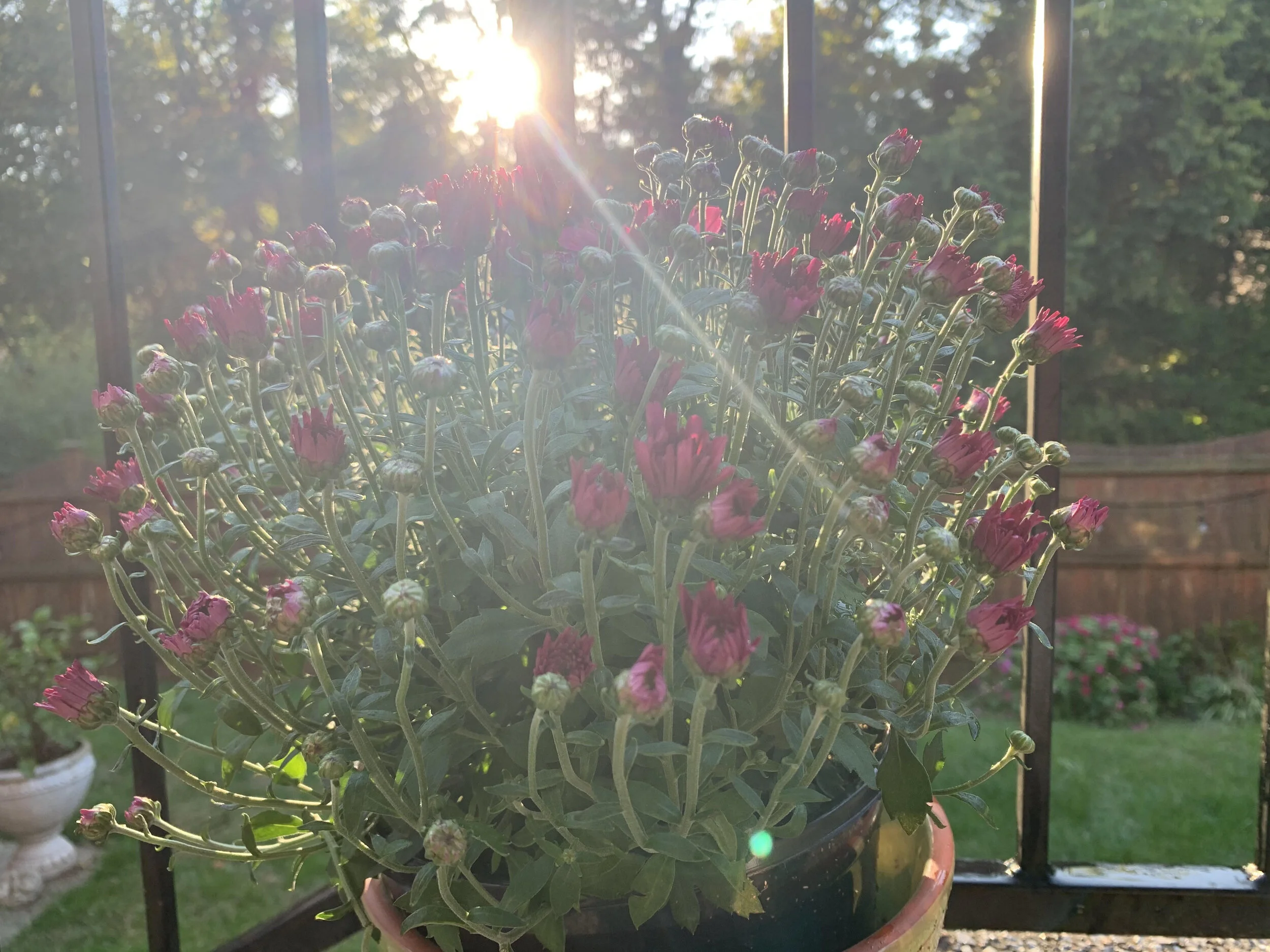
This week, I went in search of mums for my front doorstep. Apparently, I am doing this directly in between blooming mum shipments, because there were no colors besides the green of future blossoms. I went to three different stores, becoming anxious and rather grouchy. Then I had to ask myself – why have mums become so important? What ignited my obsession with mums?
The mum search started because I am having a small working group at my house this week. I wanted my house to look welcoming. I started to tell myself all the things that weren’t right about my house for this meeting. At some point, the importance of what was inside my home was overshadowed by the need to perfect my surroundings. In fact, I ultimately forgot that I am a welcoming person, therefore my house will be welcoming, whether I have blooming mums or not.
Inside out vs. outside in
The number one thing I work with most clients on is getting back in touch with your internal self. We all were born with an internal compass – a knowing, a guide, to provide us direction, and yet we listen more to outside forces (our parents, what we read, media, suggestions from others) before we will tap into this internal knowing we all were born with. This internal knowing is confidence. The more we get away from it, the less confident we are. The less confident we are, the more unhappy we are.
I know this because for a long time, I didn’t listen to what was inside of me. I operated more by thinking about how I looked to others, how I conformed, and how I did things that others wanted me to do. In my job, I was uncomfortable with doing something too outside the norm. The real power is in recognizing that and being who you were born to be. True visionaries don’t conform.
There are ways I have learned to help with this:
Recognizing when I was making decisions in work or life based on what others wanted me to do rather than what I felt was best
Gaining information (from others or educational sources), but then tapping into the knowing part of me about what was the next best step forward
Meditating and journaling to get in a habit of listening to what I know to be true
Asking myself, “What is my gut feeling on this?” and “What if I am already prepared and have everything I need?”
Saying no to things I don’t want to do (This one is important! For more guidance, visit my past blog post at https://www.k8co.com/blog/the-power-of-a-no)
The ultimate goal in our jobs and life is to use the talents we have and to create meaning that fulfills us. Do I, at times, conform or do something I don’t necessarily want to do for other reasons – to help someone else, to belong, or to make money/satisfy a boss? Absolutely. But now I recognize the difference, and I work towards tapping into my internal self first. The more I do this, the happier and more fulfilled I am. I remind myself - I am smart, I am enough, and this is the true power of me and what I bring to the world.
Whether my mums look like they are blooming or not.
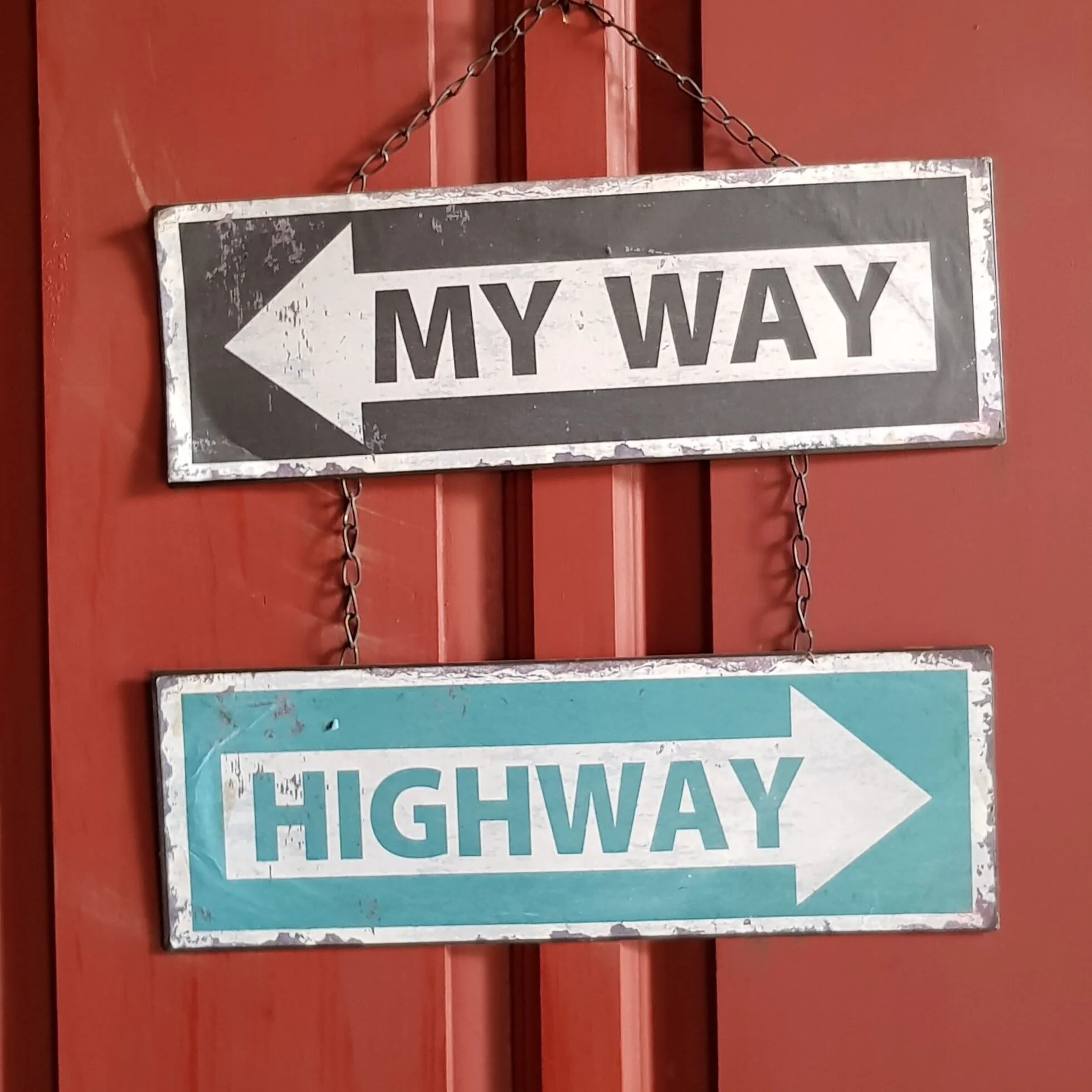
Just Do it My Way! Lessons On Controlling Others.
I used to think I had to control everything, including people. I used to think my success in my career and raising a family was because of it. I had everything under control! Until I didn’t.
Early on, the more responsibility I had, the more I wanted to control the people around me, including my work team, my spouse and my kids. I thought I was mostly the reason that they succeeded or failed and had a direct correlation on what they did. Not only that, but that their success or failure was a direct reflection on me and whether I was a “good” person or not – a good boss or a good parent.
I used to tell people what they should do and then be upset when they wouldn’t do it. Fear would set in. Why are they not doing it the way I said? Don’t they know they will fail and once this happens, they will be miserable and feel pain? Their failure is going to reflect poorly on me!
What I didn’t realize is there is a time and point in any relationship where my responsibility ends and the other person’s starts. What I didn’t realize is that if I don’t allow for this to happen, I am making this person more dependent on me, which is not my intent. Not consciously working toward independence is harmful to both of us.
I learned ways to help me not want to control others.
Examine my rules. There are some rules that need to be kept for the safety or security of others. Ethical business practices. Don’t run out into the street. This is true in business and definitely true as kids are growing and learning. But I found I didn’t know where certain rules came from. After looking further, I realized they were either taught to me (by parents, others or society) or were institutionally in place even though they did not matter.
As an example, I used to tell my kids, “you must go to college”. I came to realize this didn’t make sense for everyone. After examination, my real purpose was for my kids to develop into independent, happy, contributing members of society. There are other ways to do that.
Share knowledge, then ask. It wasn’t until later that I learned the knowledge and experience I have can be shared and then followed with an invitation for the other person to use their own critical thinking and assess what to do with it. There is power in using an “I“ statement such as “I found, based on my experience ______ . What do you think?”
This invites more critical thinking, more personal learning and more opportunity for each person to tap into their own internal gifts they have to bring to the situation. It allows for discussion and ownership.
Recognize where my responsibility stops and theirs starts. My responsibility is sharing my experience, knowledge, or facts, then allowing for the other person to take responsibility. When they become accountable, it does not mean it will be done the way I want it to be done.
I am giving up control to let others take it while providing support and feedback when appropriate.
Set expectations and agreements. Expectations are what you expect. Agreements are what you both agree to. Both are important, but if “agreement” is not met to create buy-in, then a critical part is missing.
Once these two things are in place, then it is easier to give up the control of the process and let growth or consequence (also growth!) naturally take place. This is the best way of learning.
Do I still worry about others and their outcomes? Sometimes. However, after working through these steps I have much more peace reminding myself, “It is not time for me to own this now. It is their responsibility”.

What "What You Believe, You Can Achieve" Doesn't Tell You
In 2014, my life fell apart. I was a successful executive with a family, trying to keep everything balanced and under control. I was doing what I thought I should do - pushing myself to work harder and trying to get others to do more.
I was taught that “what you believe, you can achieve”. Such a heady claim! But no one ever told me that “believing you can achieve” through force isn’t sustainable.
I was unhappy and would barely admit it to myself. Instead, I covered up my unhappiness, thinking if I could just stick it out, life would get better. I believed I could get things to change. I believed I could get others to change. I listened to all of the thoughts in my head and opinions of others about what I “should” do in the circumstances rather than what I wanted to do.
Then I hit the lowest point. Work was going well, but my three teenage kids were struggling, and one was heavily using drugs and alcohol. My marriage was distant and difficult and then came to a shocking end. What I had believed was my future for so long now was no longer an option, and it was traumatic.
While grieving, I went through divorce proceedings, put our house on the market, and offered support and stability to my children (including helping one into rehab). I did this all while maintaining a visible public career and came to the hard realization that what I had believed I could achieve wasn’t happening.
This is when I made an oath to learn more about myself and what got me to this point. What did I need to do so I could live differently during my next phase of life? I made it my mission to get to know my thoughts and understand my feelings. I vowed to myself that I would never sleepwalk through life again. I went to therapy, I meditated, I journaled, I studied.
I asked myself hard questions like:
What do I want?
How do I feel about certain circumstances?
What am I learning about myself as I look through past phases in my life?
What am I learning about myself now?
What feelings or thoughts do I have making me resist facts of a situation?
How can I strengthen who I am as a person and become intentional about my future?
For years, I had been so busy helping others and looking for outside acceptance that I had forgotten how to look inside and take care of myself. I had to get to know myself again.
Do I now believe I can achieve? Absolutely. I don’t believe I can do it with the power of an insistent bully, but rather with my power, moving myself forward with understanding and acceptance of how I fit into the world as I am. Now, I can do and be all the things I longed for most of my life.
These circumstances helped me become truly fulfilled today as I walk alongside others and coach them on how to listen to their intuition, live authentically, and realize their own power within. When you cultivate and believe these things, you really can achieve what matters most in life.